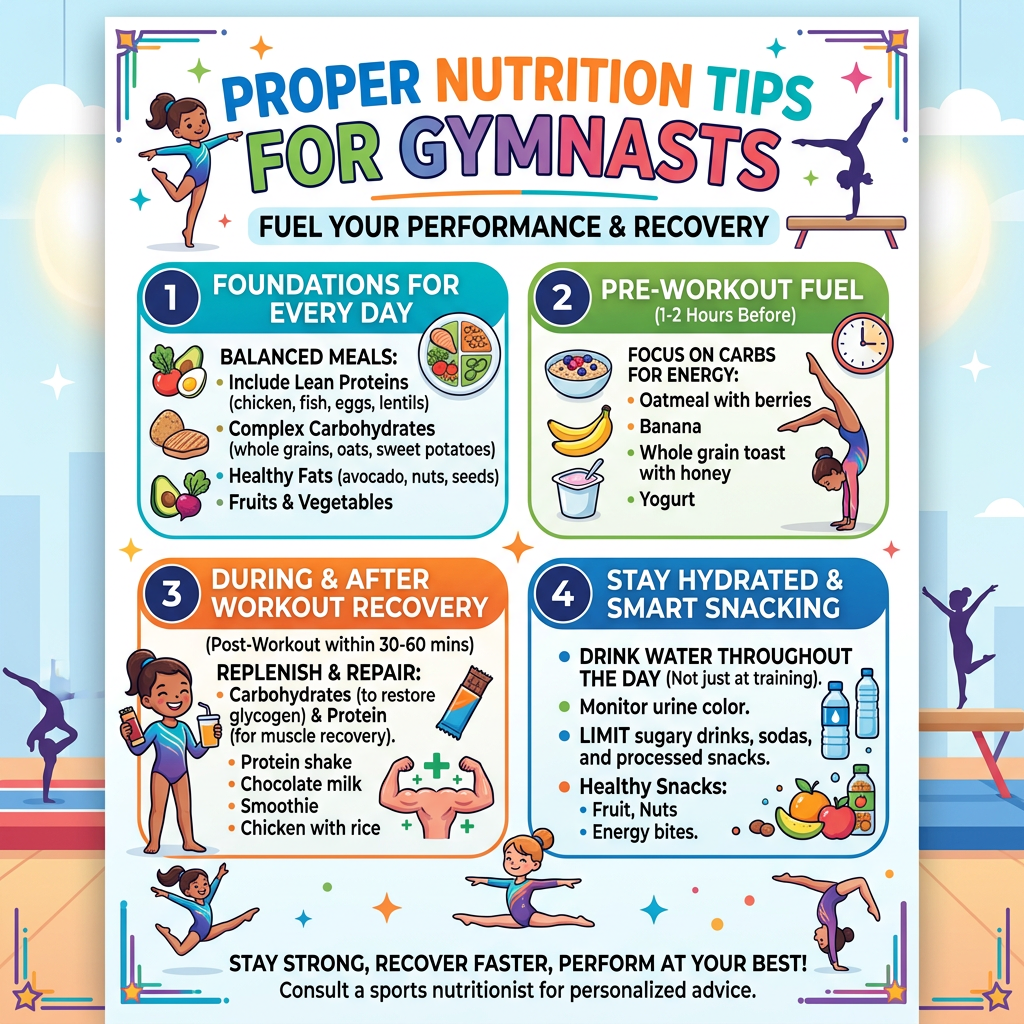
If you’ve ever wondered whether a gymnast’s nutrition needs change as they grow, train, and suddenly start eating like a small but determined raccoon… the answer is yes. A big yes. A “wow, that escalated quickly” yes.
Gymnastics is a sport where kids train hard at young ages, grow at unpredictable speeds, and burn through energy faster than you can say, “Where did your other sock go?” So naturally, their nutrition needs shift right along with them.
Let’s walk through what changes, when it changes, and why it matters — with a little humor to make the topic feel less like homework.
Early Childhood (5–8 Years): The Snack‑Powered Years
At this age, nutrition is mostly about supporting growth and building habits — and trying to convince your child that yes, they do like the food they liked yesterday.
It can feel overwhelming with all the advice out there, but here’s what actually matters most:
- Regular meals + snacks
- Balanced carbs, protein, and fats
- Hydration throughout the day
- Avoiding restrictive patterns
Training is usually low to moderate, so needs are similar to other active kids — but consistency is key. Think of this stage as “fueling the basics.”
Pre‑Teen Gymnasts (9–12 Years): The Energy Explosion
This is when training hours often increase… and so does the grocery bill.
If your gymnast is anything like Zoey, they might train 12 hours in the gym and another 12 hours at home “just practicing something real quick.” At this stage, their bodies need:
- Higher calorie intake to match training
- More carbohydrates (kids burn through glycogen like it’s their job)
- Protein spaced throughout the day
- More attention to hydration
This is also when under‑fueling can sneak in if meals aren’t planned around practice. Busy families, rejoice: protein bars count as carbs, protein, and sometimes even fiber. We take the wins where we can.
Puberty & Early Teens (12–15 Years): The Chaos Era
Welcome to the most nutritionally demanding stage — and the most emotionally… unpredictable. Puberty hits like a surprise beam check: one minute everything’s fine, the next minute you’re Googling “why is my child suddenly feral?”
Why this stage is tough:
- Rapid growth
- Hormonal changes
- Increased training intensity
- Higher risk of low energy availability (LEA) and RED‑S
What they need more of:
- Total calories
- Calcium + vitamin D
- Iron (especially menstruating athletes)
- Consistent fueling before, during, and after training
Skipping meals at this age has real consequences — but teens are also experts at “If I can’t see it, it’s not a big deal.” How do we help them? We may never know. Snacks help, though.
High‑Level / Elite Teens (15–18 Years): The Fueling Strategy Stage
Training hours can reach 20–30 hours per week — and that’s just the gym. Add home practice, conditioning, and the occasional “I’m just stretching,” and you’ve got a full‑time athlete.
What becomes essential:
- Strategic fueling (pre, mid, and post workout)
- Higher carbohydrate intake
- Protein every 3–4 hours
- Hydration plans
- Monitoring for deficiencies
This is also when many gymnasts benefit from a sports dietitian. And yes, we all feel the burn of “another expense,” but even basic online resources can help.
Does the Type of Nutrition Change?
The foundations stay the same — carbs for fuel, protein for repair, fats for hormones and brain health — but the amounts and timing change as gymnasts grow.
What increases over time:
- Total calories
- Carbohydrates
- Protein (slightly)
- Hydration needs
- Micronutrients (iron, calcium, vitamin D)
What stays consistent:
- Balanced meals
- Regular snacks
- Avoiding restrictive eating
- Supporting growth first, performance second
Why Nutrition Matters So Much in Gymnastics
Research shows many gymnasts fall 300–700 calories short per day. That’s not a small gap — that’s the difference between “I feel great!” and “Why does everything hurt?”
Proper nutrition supports:
- Strength
- Power
- Focus
- Recovery
- Injury prevention
- Hormonal health
- Long‑term development

It’s not about eating perfectly — it’s about eating enough, consistently.
What Happens When Nutrition Isn’t Enough?
When a gymnast doesn’t get enough energy, the body has to choose between fueling training and fueling growth. And guess what? Growth usually loses.
Here’s what under‑fueling can look like at any age:
1. Low Energy & Fatigue
- Tired during practice
- Trouble finishing routines
- Feeling “sluggish”
- Needing more breaks
- Difficulty focusing
Kids burn through energy fast — under‑fueling hits them even faster.
2. Increased Injury Risk
Under‑fueling affects bone strength, muscle recovery, coordination, and reaction time. This can lead to:
- More falls
- Overuse injuries
- Stress fractures
- Slower healing
3. Poor Recovery
Signs include:
- Soreness lasting longer
- Feeling wiped out the next day
- Difficulty building strength
Recovery is where progress happens — and nutrition drives recovery.
4. Mood Changes
Sometimes what looks like “attitude” is actually a tiny human running on fumes.
5. Plateaued or Declining Performance
Skills stall, power drops, confidence dips — all because the body doesn’t have enough fuel.
6. Growth & Development Issues
Under‑fueling can affect:
- Height
- Bone density
- Hormones
- Muscle development
- Puberty timing
7. Hormonal Disruption
Especially in teens. Missing or irregular periods can be a sign of low energy availability.

8. RED‑S (Relative Energy Deficiency in Sport)
A condition caused by chronic under‑fueling that affects metabolism, immunity, heart health, bone health, and more.
9. Loss of Joy & Motivation
Gymnastics feels harder when the body is under‑fueled. Cue burnout, frustration, and mental blocks.
10. Long‑Term Consequences
If under‑fueling continues, it can affect bone density, hormonal health, growth potential, and long‑term athletic development.
How Excess Sugar Affects Growing Athletes
Don’t panic — no one is taking away your cookies. We’re parents, not monsters. Treats are allowed. Encouraged, even. It’s all about timing.
Sugar gives a quick burst of energy… followed by a crash. For gymnasts, that can mean:
- Great energy at the start
- Sudden fatigue halfway through
- Trouble focusing
- Feeling shaky or irritable
Gymnasts need steady energy, not roller‑coaster energy.
Excess sugar can also affect:
- Endurance
- Mood
- Recovery
- Inflammation
- Sleep
- Appetite
- Dental health
But again — sugar isn’t the enemy. It just needs to be timed well (hint: after practice is perfect).
The Benefits of Proper Nutrition for Gymnasts
Here’s the fun part: when a gymnast starts fueling properly, the difference is often dramatic — and fast.
1. More Energy Throughout Practice
Parents often say, “She just has more in the tank.”
2. Better Strength, Power, and Endurance
Gymnasts feel “lighter,” “springier,” and “stronger.”
3. Faster Recovery
Less soreness, better flexibility, more consistent training.
4. Improved Focus and Mental Clarity
A well‑fueled brain is a coach’s dream.
5. Fewer Injuries
Fuel protects bones, muscles, and tendons.
6. Healthy Growth and Development
Fueling properly supports height, bone density, hormones, and puberty.
7. More Stable Mood and Confidence
Steady blood sugar = steady emotions.
8. Better Skill Progression
Fuel literally supports the brain‑to‑muscle connection.
9. More Joy in the Sport
When the body feels good, gymnastics feels fun again.
And yes — improvements are often noticeable within 1–2 weeks.
Bottom Line

Nutrition for gymnasts absolutely changes over time — and getting it right can transform how they feel, train, grow, and enjoy the sport. It’s not about perfection. It’s about consistency, balance, and giving their bodies the fuel they need to thrive.
And yes… the cookies can stay. Just maybe save them for after practice.
From my corner of the village to yours.
Why stop now. The journey awaits.